Earle C. Anthony and
KFI
By John F. Schneider W9FGH
|
|
Earle C. Anthony and
KFI By John F. Schneider W9FGH |
|
www.theradiohistorian.com Copyright 2026 - John F. Schneider & Associates, LLC (Click on photos to enlarge)
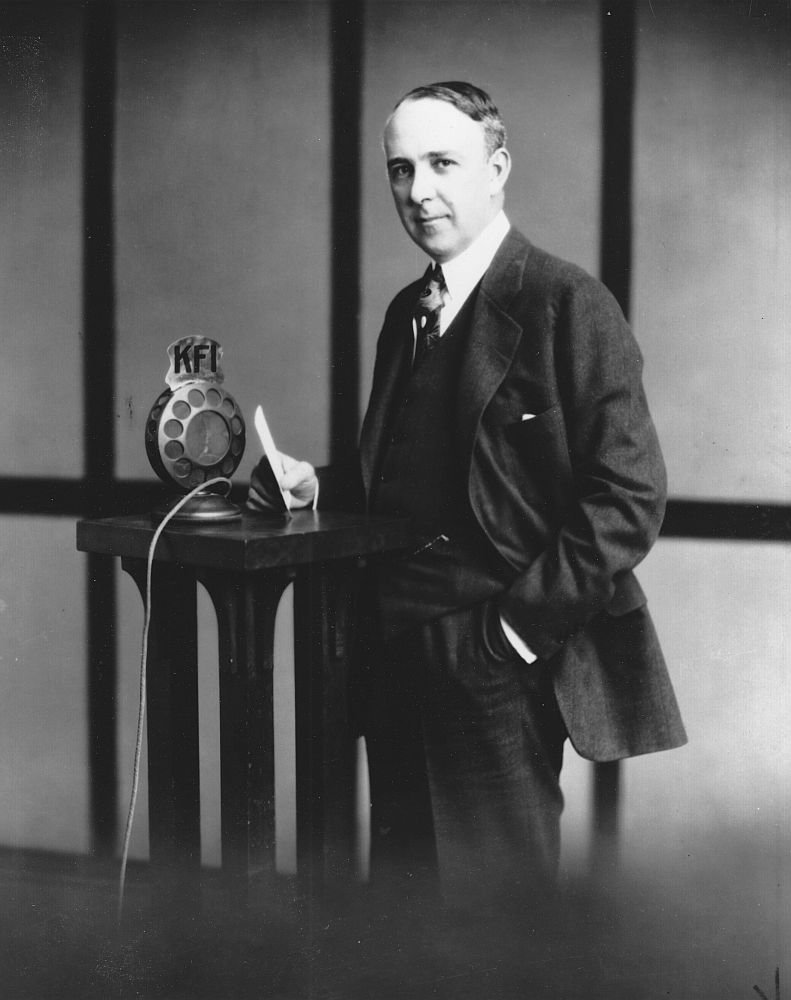
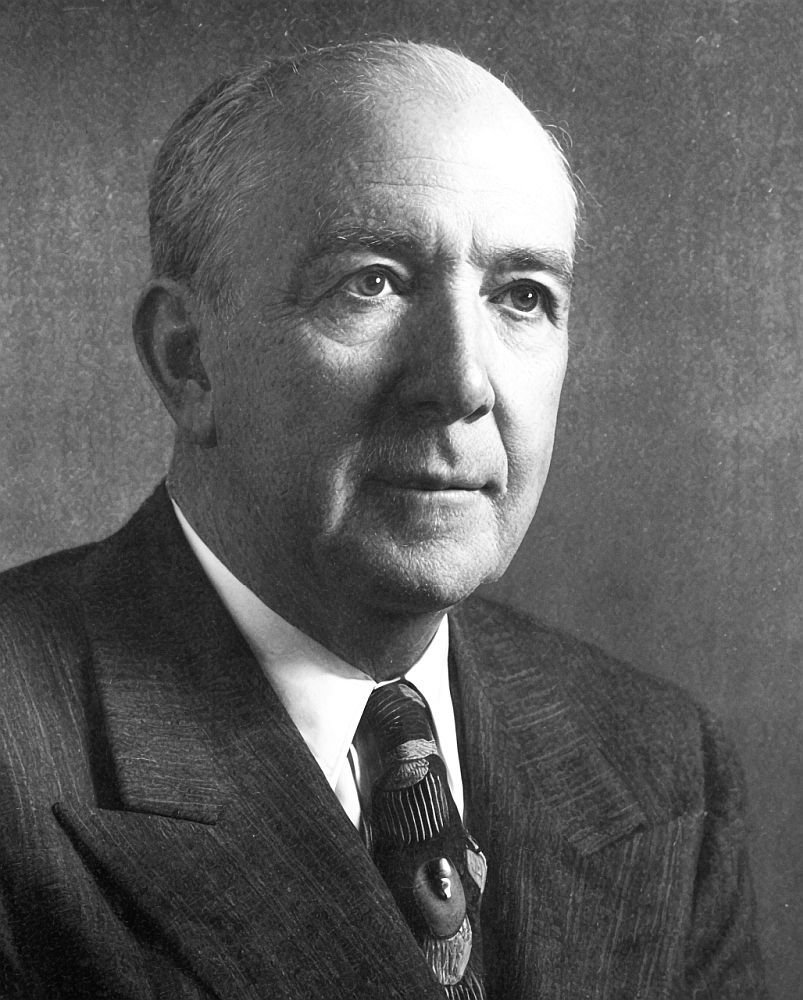
Earle C. Anthony
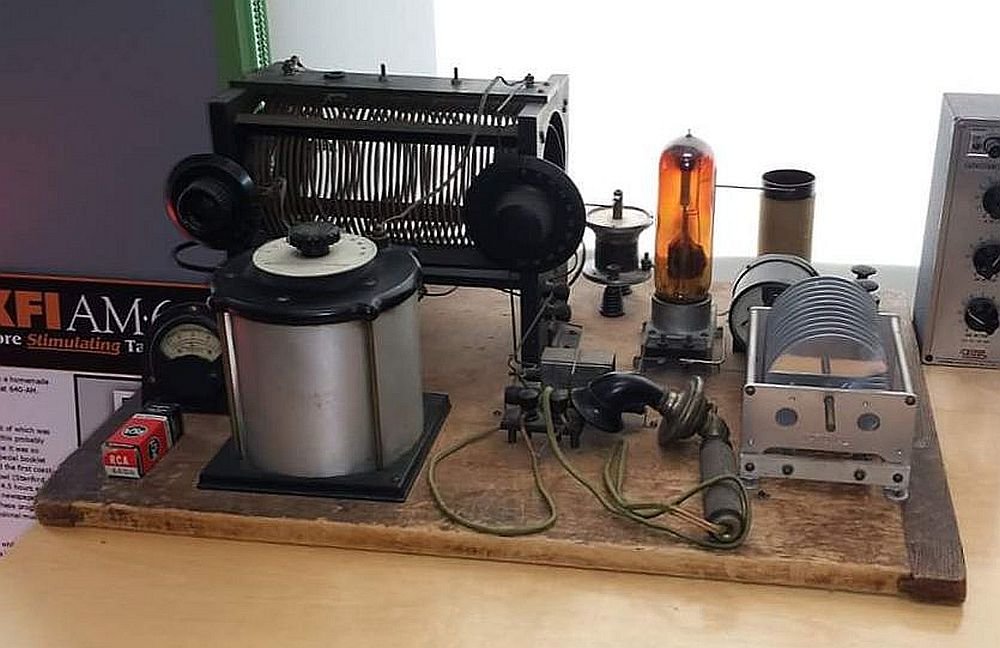
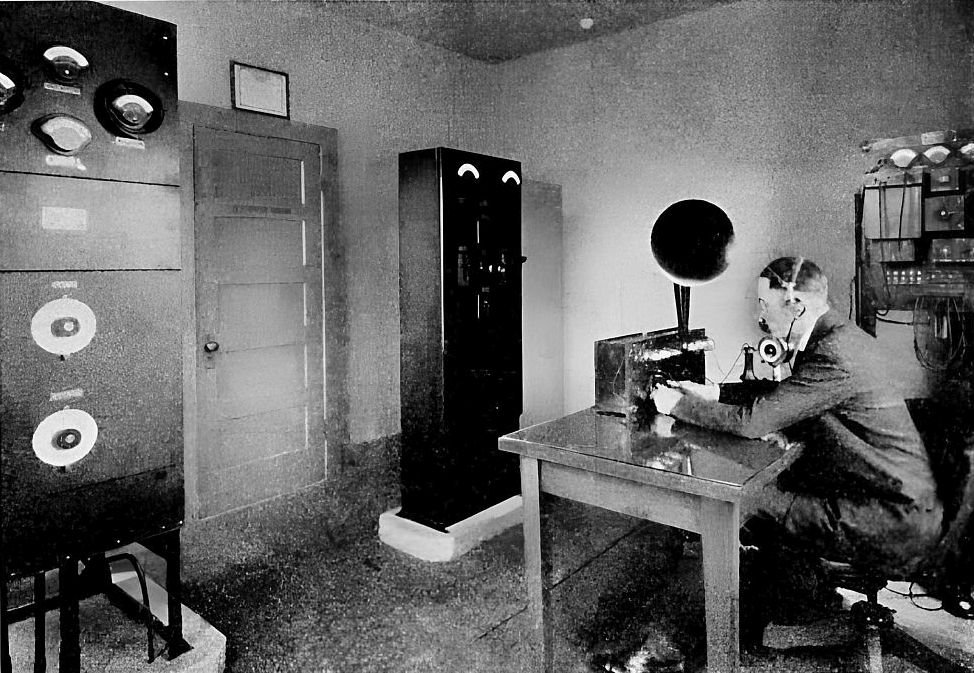 1923: KFI's 500-Watt Transmitter
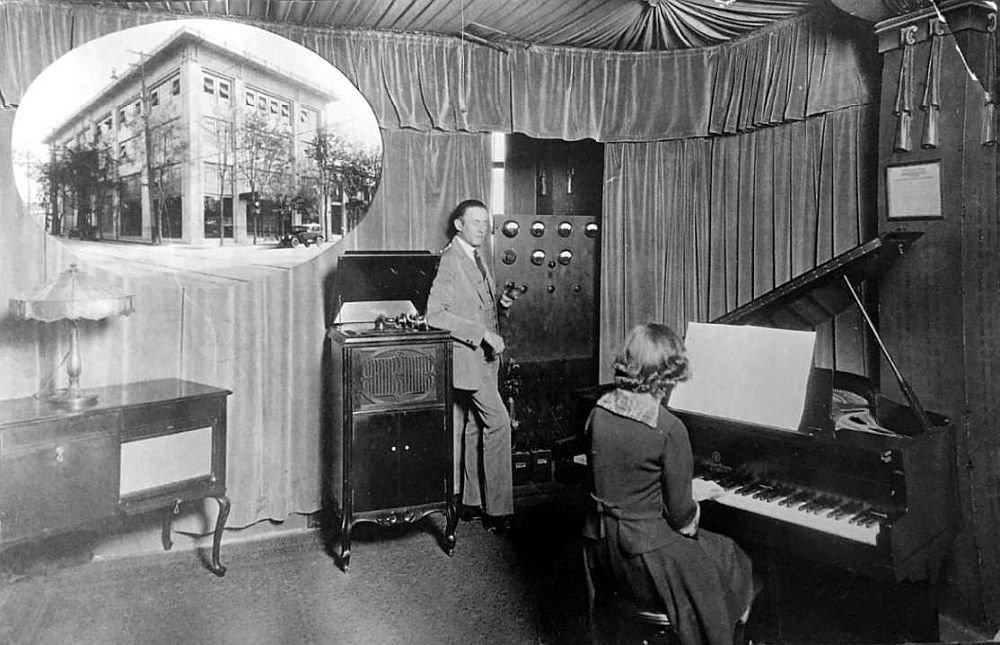
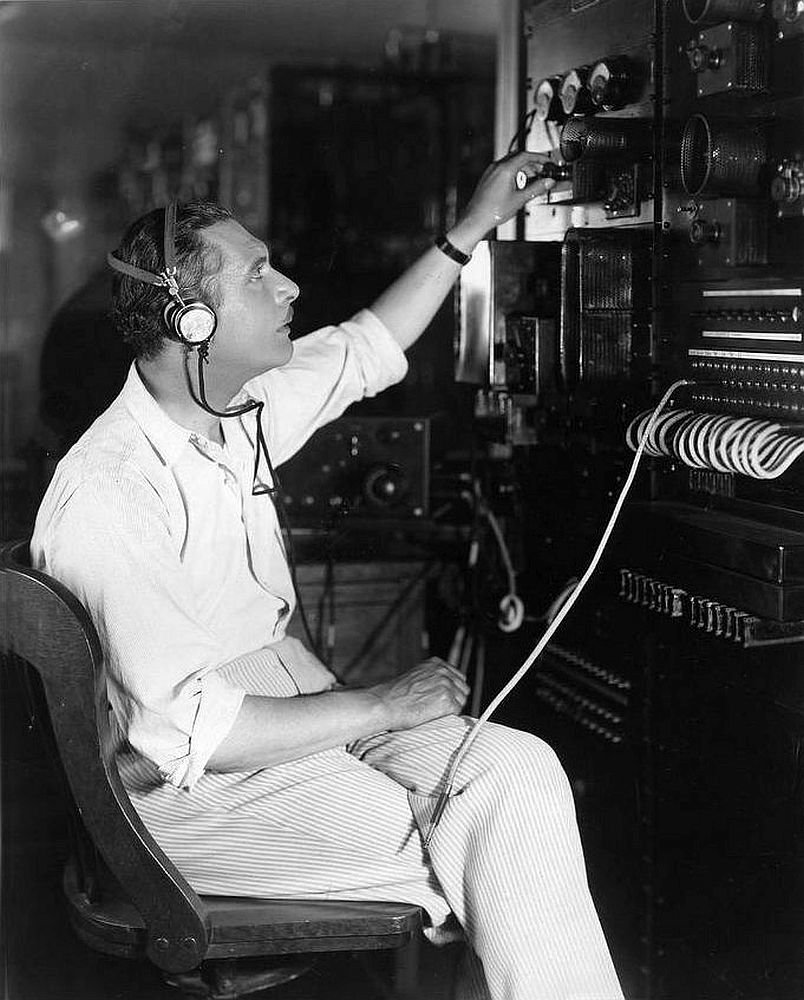 1925: KFI"s Studio Control Room 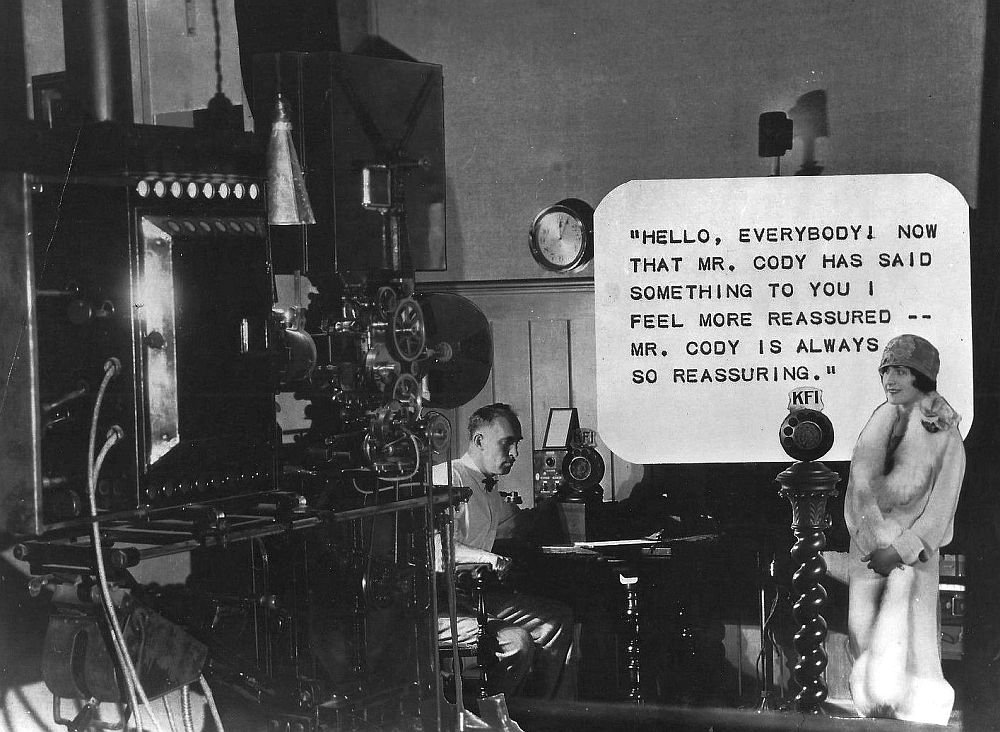 1925: KFI Joined With
M-G-M to Broadcast the Soundtrack of a Silent Movie.
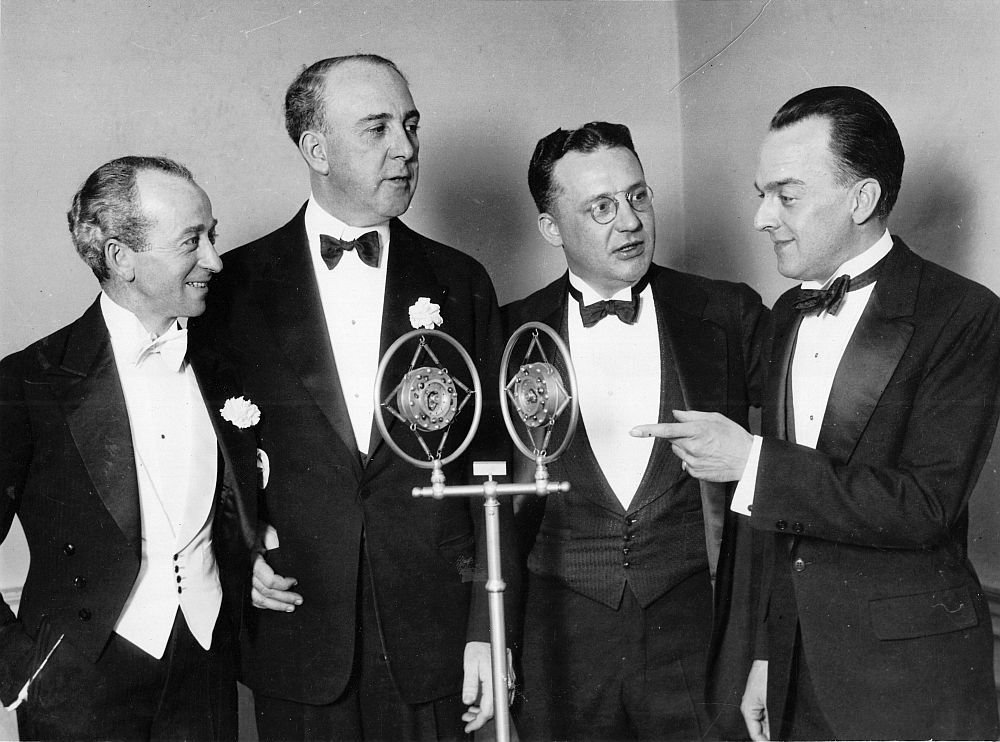
1927: KFI Joins the NBC "Orange" Network. L-R: NBC Music
Director Max Dolin; Earle C. Anthony; NBC Pacific Coast Manager George
Podeyn; NBC National Program Director R. Chatfield.
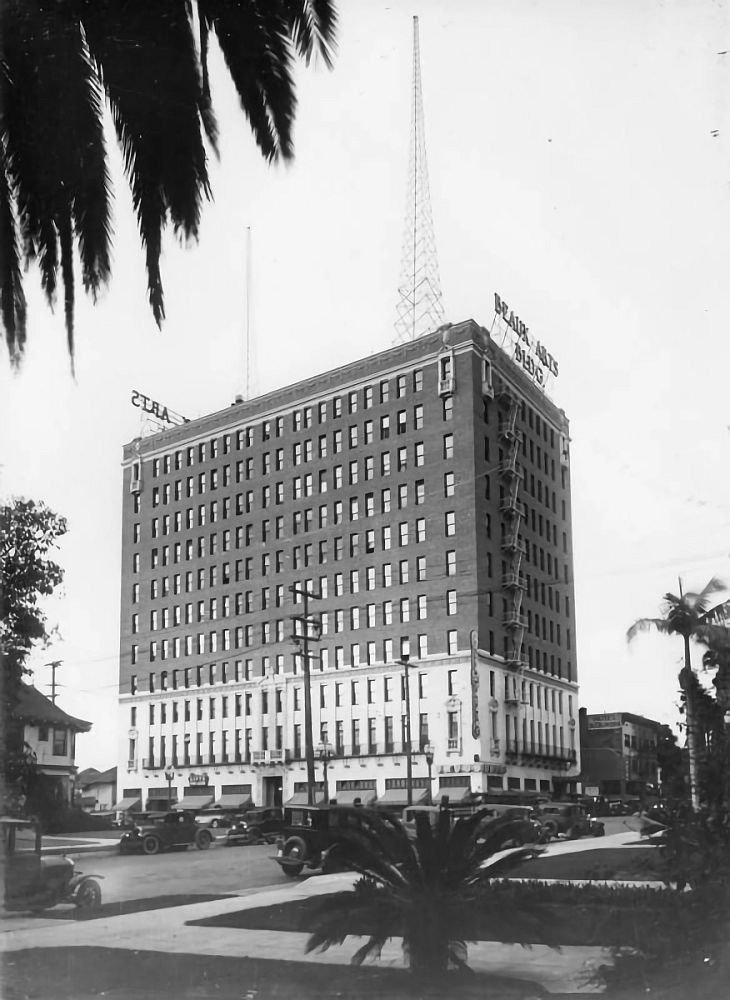 1929: The KECA 1430 kHz Antenna on the Roof of the Beaux Arts Building in Los Angeles. (Courtesy of Jim Hilliker)
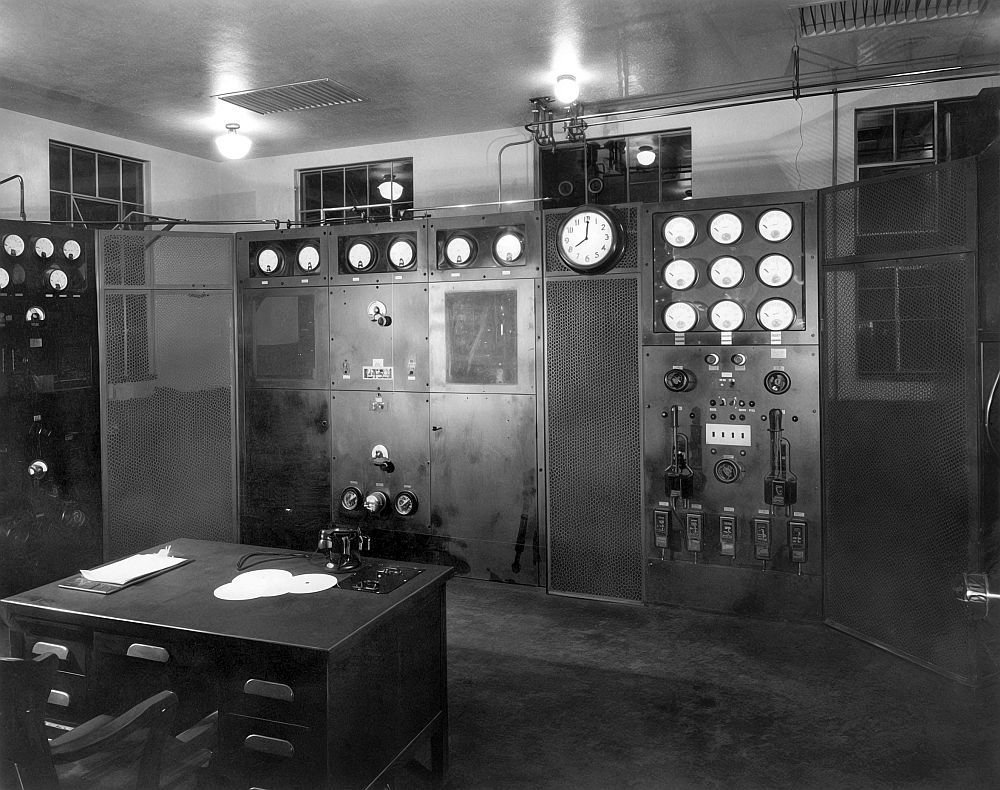
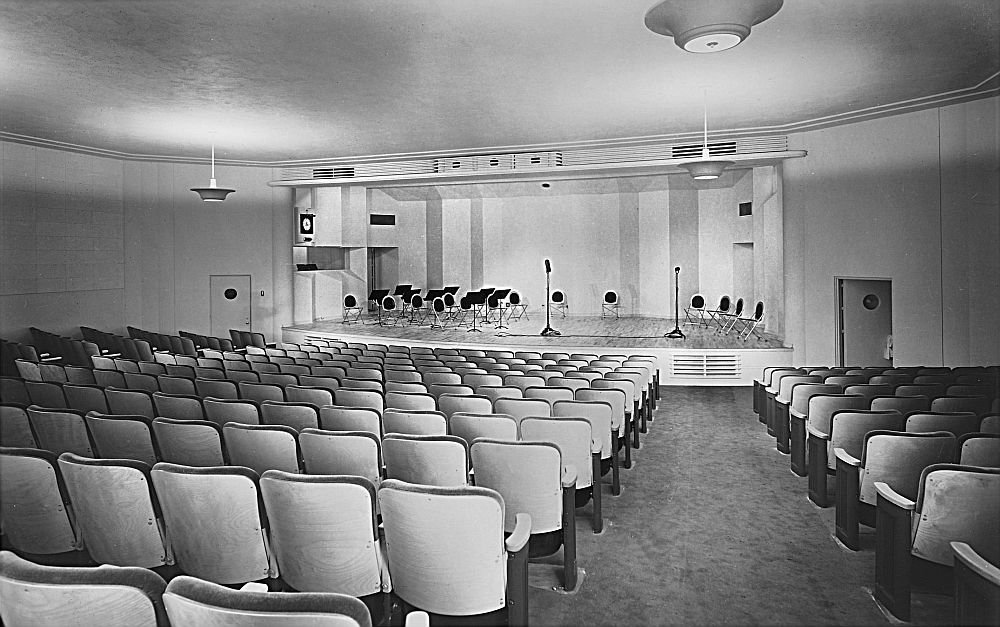
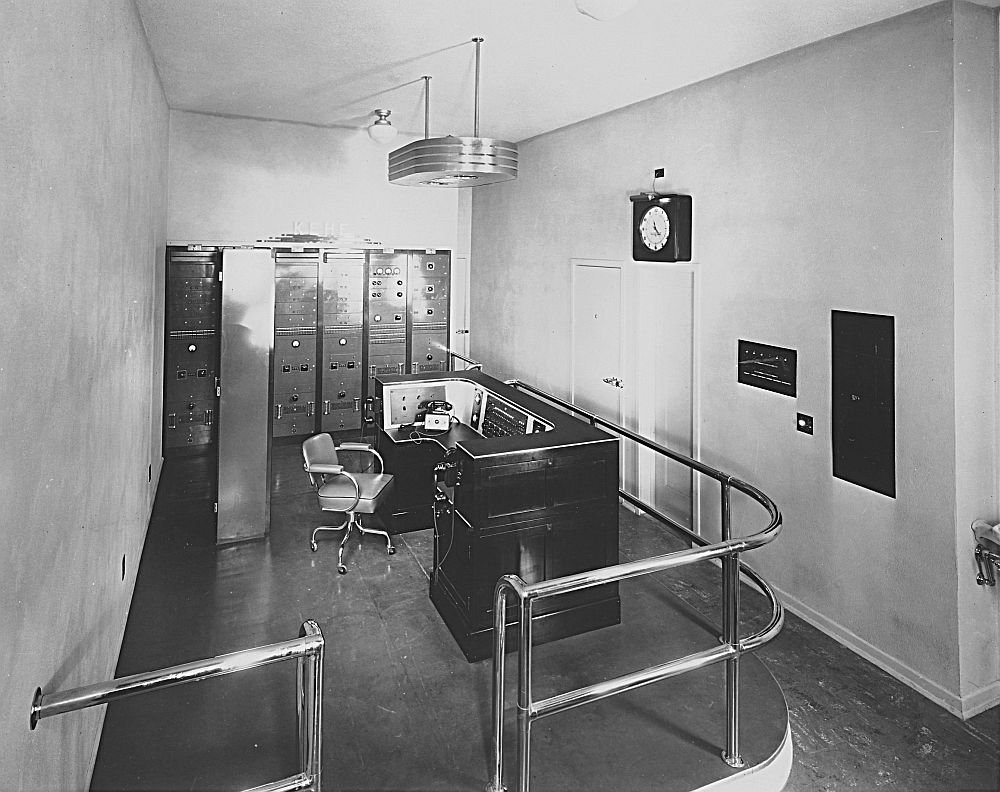
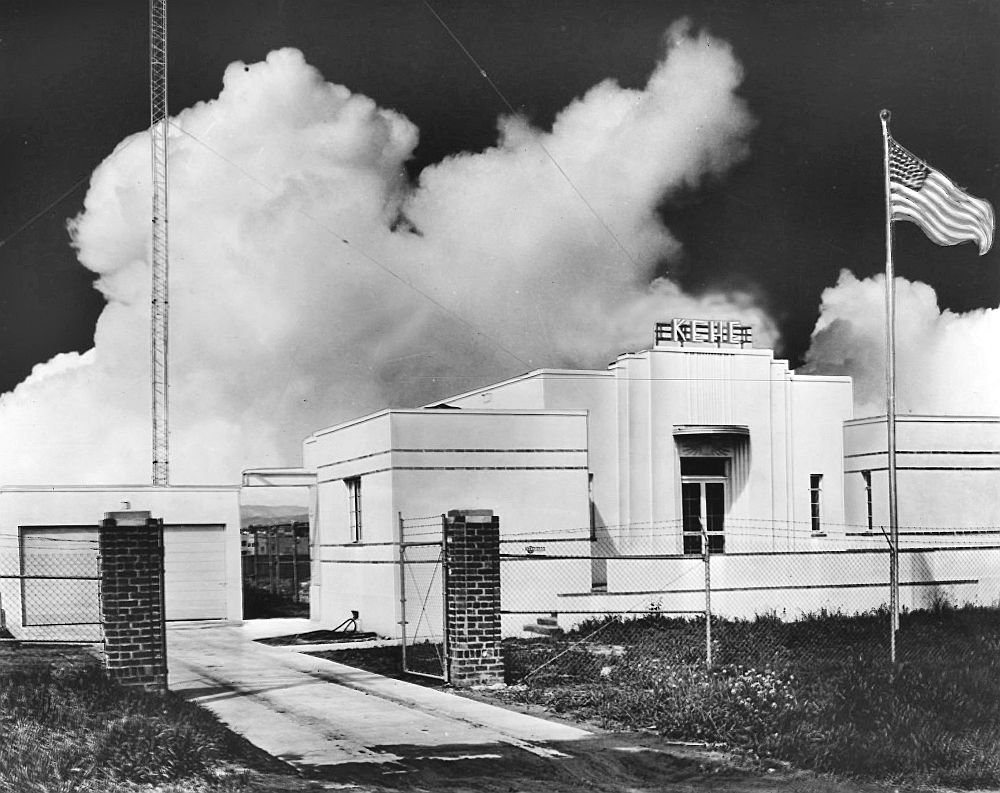
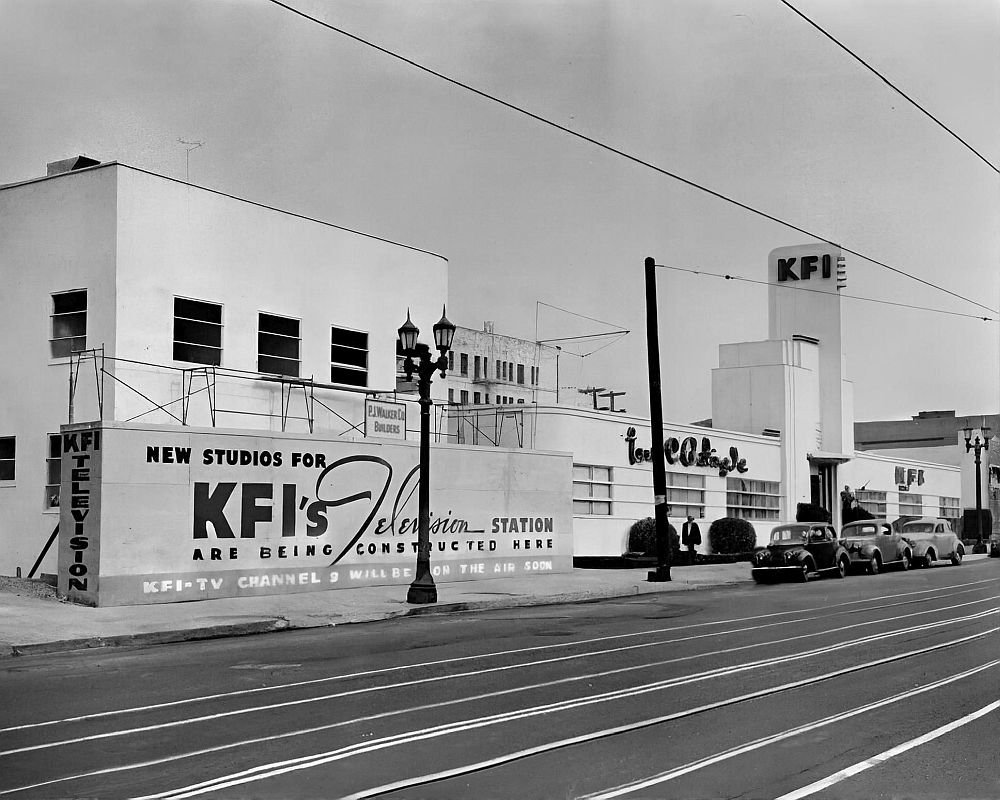
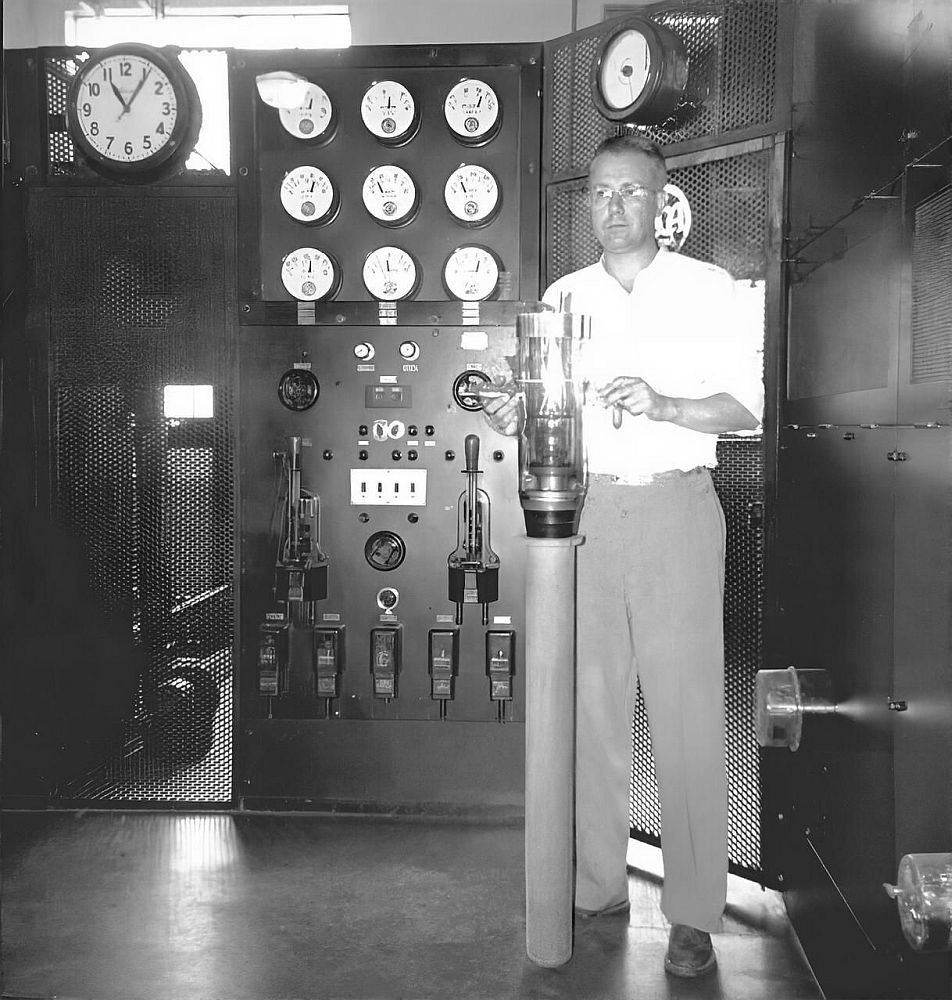 KFI Engineer Carl Sturdy holds one of the two 100 kW water-cooled power tubes used in KFI's transmitter. Sturdy was one of the first engineers hired by Earle Anthony. 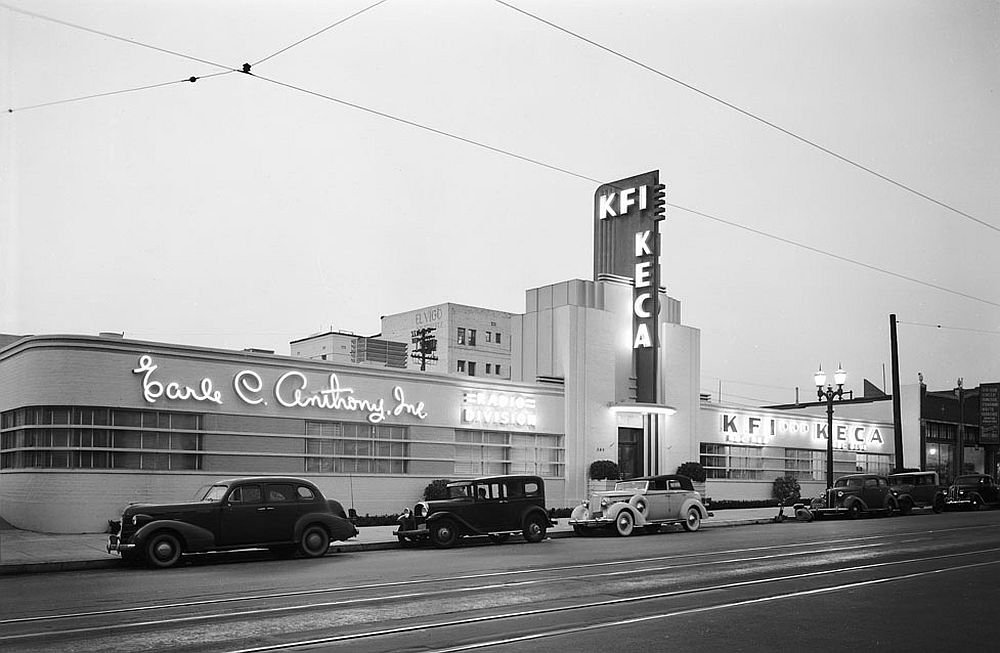 Earle Anthony's purchase of KEHE included this attractive Art Deco studio building. It was KFI's home from 1939 to 1975. 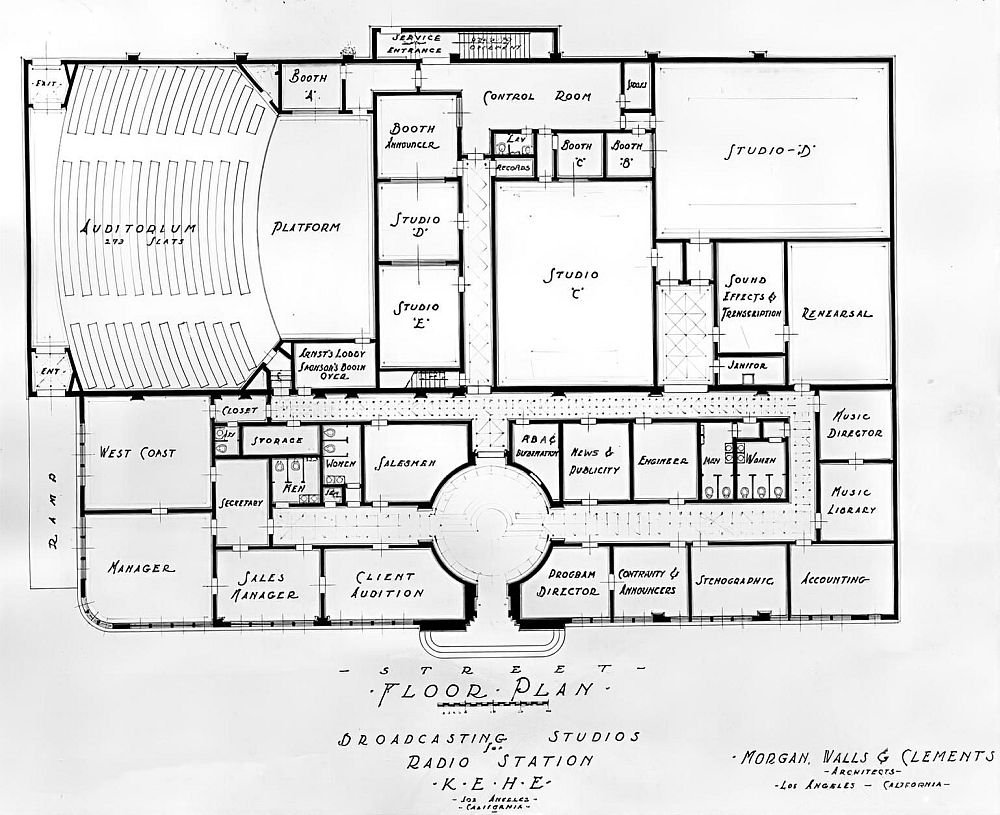 Floor Plan of the KFI Studio Building on Vermont Avenue
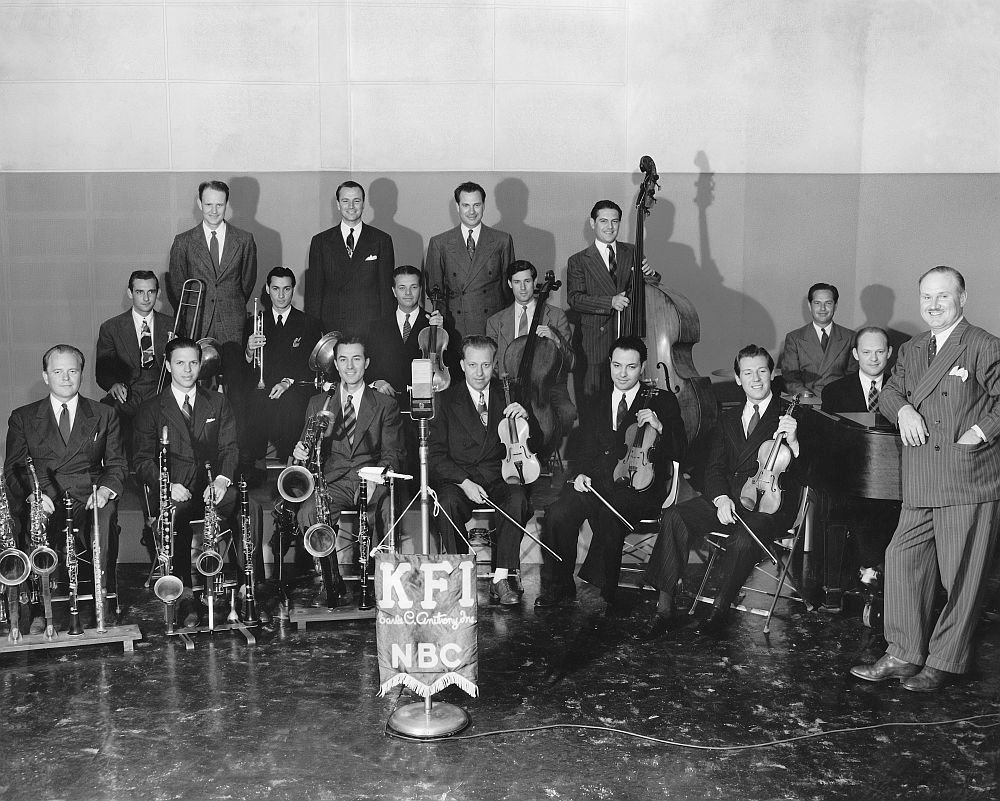 1941: Claude Sweeten led the
KFI Studio Orchestra.
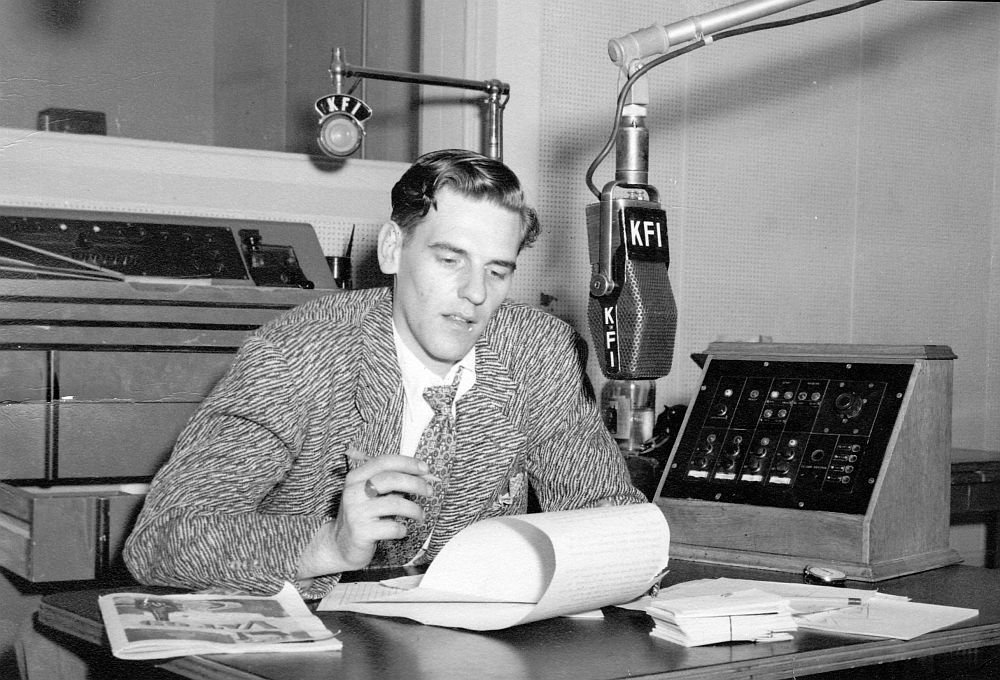 An unidentified announcer in the KFI Studios, circa 1950
|
|
Earl C. Anthony Builds KFI The story of KFI is the story of the
automotive and radio pioneer Earle C. Anthony. He
was born December 18, 1880 in Washington, Illinois,
studied electrical engineering at Cornell University, and then
relocated to Los
Angeles with his father in 1892. There
they built a chain of service stations and started the Western Motor
Car
Company in 1904 as a sales agent for several automobile brands. Anthony particularly appreciated the Packard
brand of luxury automobiles, and in 1915 he was able to become its
exclusive
distributor for all of California. He
would continue in this role until the company closed in 1958. In 1911, Anthony opened his large Packard
showroom and service center at Tenth and Hope Street. (Today,
it is repurposed as The Packard Lofts
condominiums.) Second to Anthony’s fascination
with the automobile was his attraction to radio. In
1922, he built a crude 50-watt transmitter
on his kitchen table and used it to open station KFI from his garage on
April
16, 1922. Soon afterwards, he replaced
it with a home-built 100-watt rig, which operated for most of 1922. In January, 1923, Earle Anthony
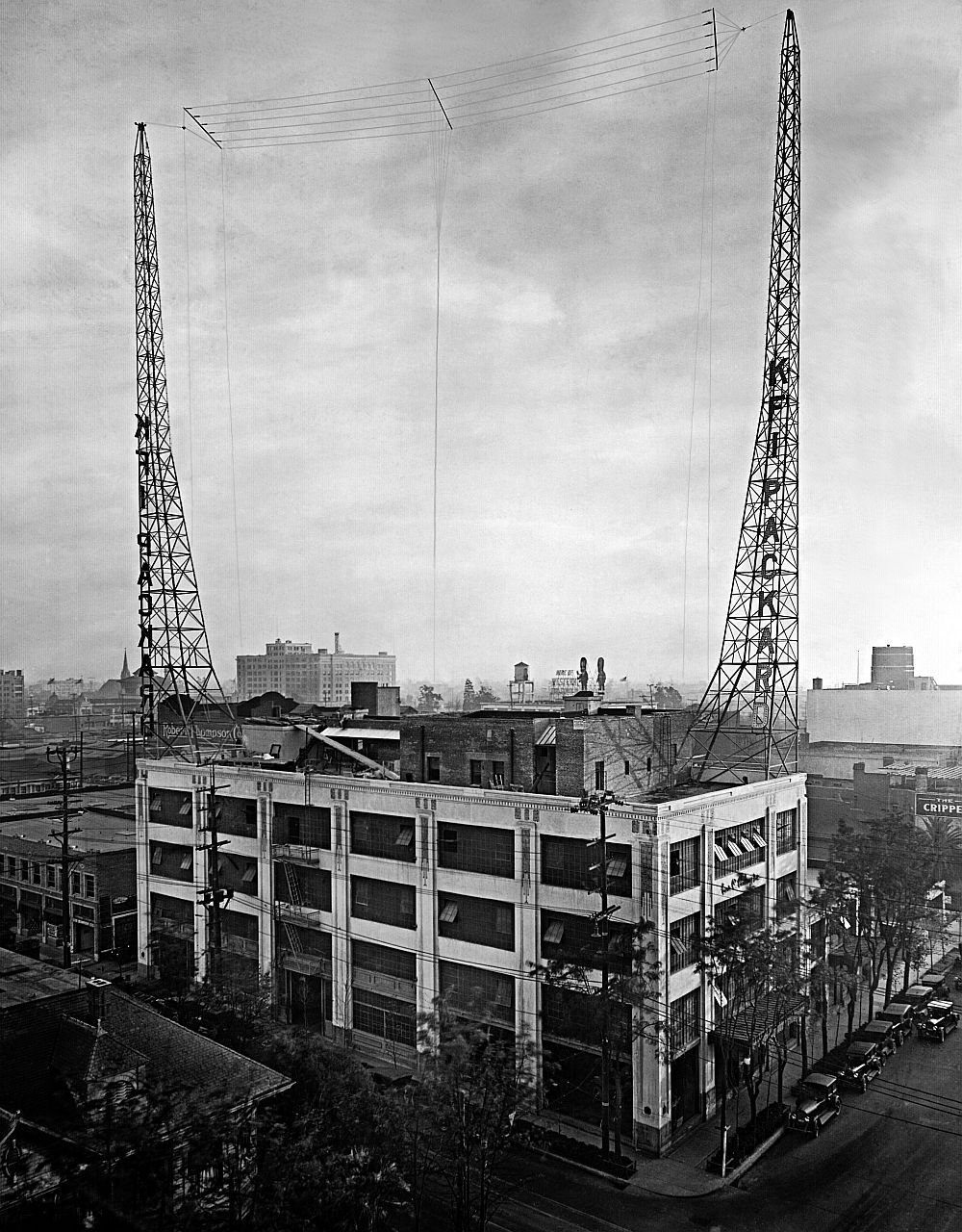
moved KFI to the roof of his Packard showroom building.
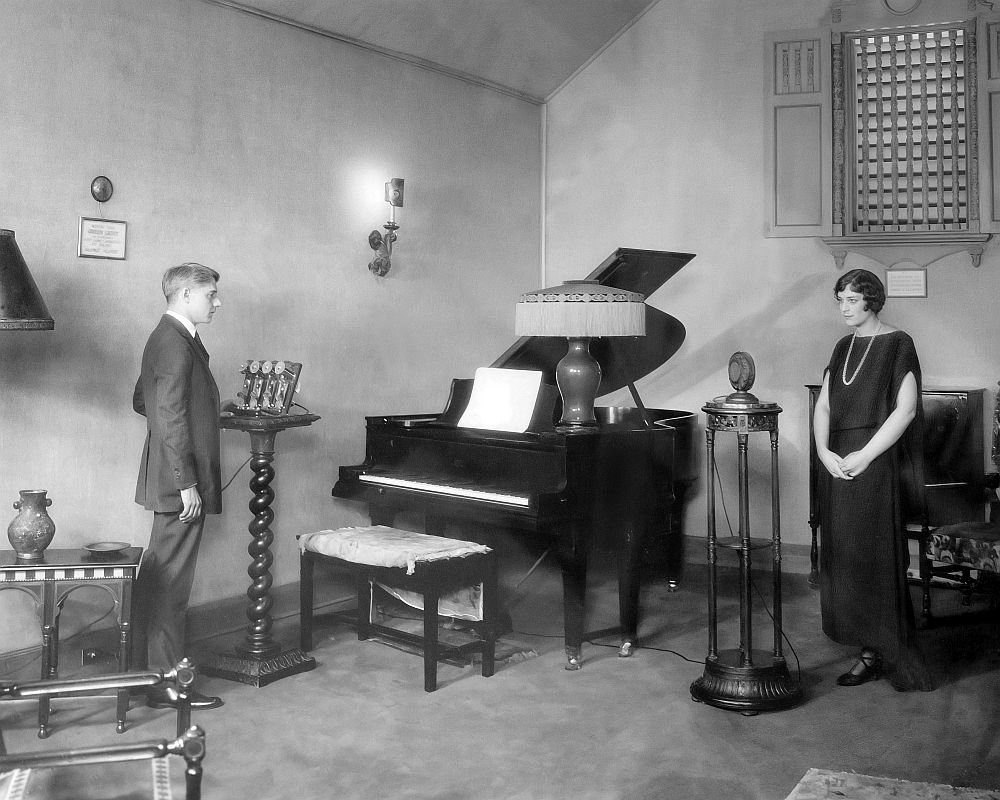
The KFI studio was decorated in the Spanish Revival
style that was in vogue in the 1920s.
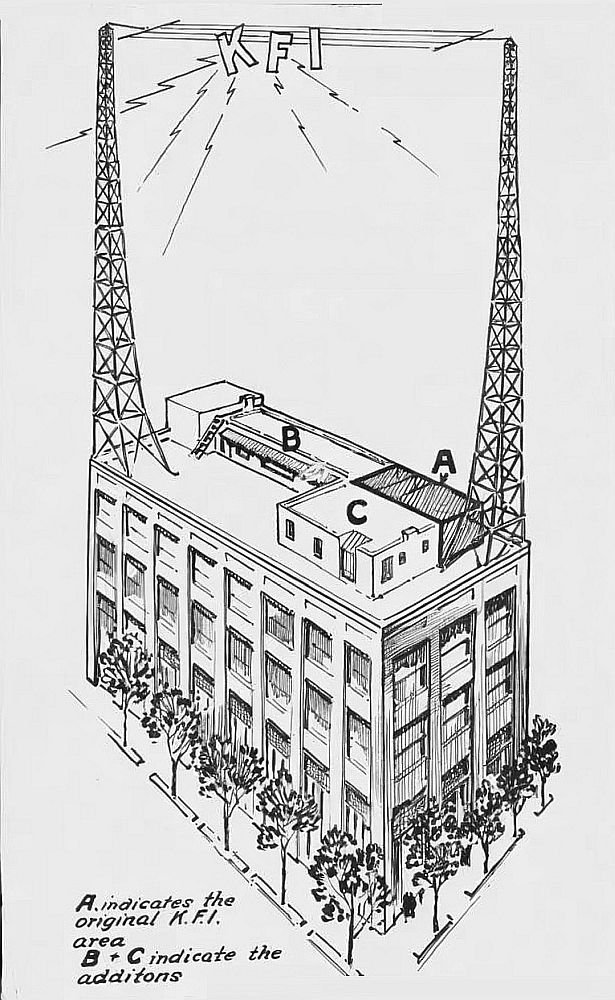
The rooftop structure contained a studio, reception room,
office and a
transmitter room. A
new factory-built Western Electric 500-watt
transmitter now broadcast a quality signal.
Two short towers on the roof supported the usual T-type
horizontal wire
antenna, in common use at the time. Initially, KFI shared its air time
with several other area stations on the single broadcast frequency of
360
meters, so its operating hours were limited.
Sign on was at 5:00 PM with the latest news, stock and
market prices broadcast
through a remote phone line from the offices of the Los Angeles
Examiner, followed
by another report at 5:30 from the Los Angeles Evening Herald. KFI
signed off at 5:50, when the staff of two (announcer and engineer) went
to
dinner. Then it returned to the air at
6:45 to broadcast a bedtime story, with live music afterwards until
11:00 PM. In September, 1922, KFI qualified for
one of the superior Class B station licenses, and was assigned to the
new 400
meter (750 kHz) frequency, sharing the channel with KHJ – the only
other Class B
station in the area. The following May,
KFI
moved to 640 kHz full time – and it has occupied that exclusive
frequency ever
since. KFI’s music programs consisted
mostly of highbrow music, targeting the kind of person most likely to
buy a
Packard automobile. Notable remote
broadcasts in 1924 included a Wagner opera from the Los Angeles Opera
House,
and the entire summer concert season from the Hollywood Bowl. Lighter fare included remote hookups of Abe
Lyman’s Orchestra from the Ambassador Hotel.
The Packard name was often woven into the program names,
such as The
Packard Six Orchestra, or The Packard Ballad Hour. It
was also mentioned in the station identifications:
This
is KFI, Los Angeles, the Radio Central superstation of Earle C.
Anthony, Incorporated,
California Packard distributors. In 1924,
a wire line connection was established with KPO in San Francisco,
allowing the
two stations to share programs on Monday nights. This
was the first network connection on the
West Coast. More Power, More Programs In June, 1924, a linear amplifier
with two water cooled tubes increased the station’s power to 1000 watts. Then on December 30, a new 5,000-watt Western
Electric transmitter went on the air –the first to come out of the
factory
after testing of the prototype at WEAF in New York. To
accommodate the new transmitter several additional
structures were built on the roof of the Packard Building, including
new 225
ft. towers. The new transmitter plant
was only authorized to operate at 1,500 watts at first, but it was
increased to
3,000 watts in 1925 and 4,000 watts in 1926.
This upgrade represented a total investment of $140,000. KFI participated in a unique
experiment in November, 1925, in cooperation with Metro-Goldwyn-Mayer,
when it demonstrated
one of the first talking motion pictures.
Radio receivers were installed in five local MGM theatres
for the
theatre audience to hear the KFI broadcast. As
a specially-produced silent film was projected
on the theatre screens, actors Norma Shearer and Lew Cody were live in
the KFI
studio, reading the lines from their script, synchronized with the
images on
the screen. By 1926, KFI Station Manager Arthur
F. Kales oversaw a staff of twenty. But
even with such a large crew, KFI still did not broadcast a full-time
air
schedule. It was on the air from 6:00 to
7:00 AM daily with farm reports and
fruit frost warnings in the winter; then again from 10:20 to 11:00 AM
on Mondays,
Wednesdays and Fridays; and then silent until the evenings when it
broadcast from
6:30 to 12:00 PM. Sunday mornings were
dedicated to church service broadcasts. On January 1, 1927, KFI originated the country’s first coast-to-coast network broadcast, as NBC’s Graham McNamee broadcast the 1927 Rose Bowl game from Pasadena. Then, when the new NBC Orange Network debuted in April, 1927, KFI became its Los Angeles affiliate, carrying network programs from San Francisco in the evenings. Don Wilson, Jack Benny’s future announcer, joined the station as its Chief Announcer from 1929 until 1933. Other well-known voices heard on KFI included Ken Carpenter, Chet Huntley, and Roger Krupp. 50,000 Watts In 1928, KFI received permission to
increase its power to 50,000 watts, but could not do so because there
were
still no transmitters on the market at that power level.
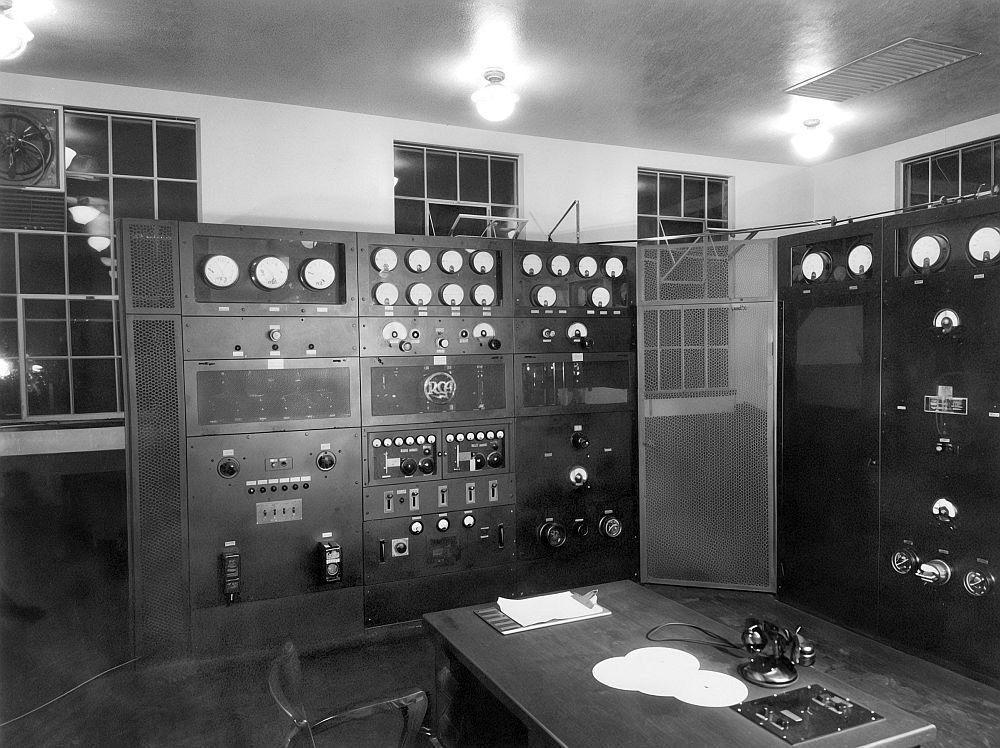
Finally in 1930, Anthony purchased an RCA 50B
transmitter and built a new transmitter plant in Buena Park. The two-story brick building shared its 30
acre plot with two 400 foot towers spaced 700 feet apart.
(That antenna was replaced by a single 750
ft. vertical tower in 1947; in 2004 a small plane crashed into that
tower,
causing it to collapse and killing the plane’s occupants.
A new, slightly shorter tower replaced it in 2008.)
The clear channel, high powered KFI hit the airwaves on July 12, 1931, with a four-hour gala dedicatory program. It was the first 50 kW station west of Chicago, and the only national clear-channel station ever assigned in California. KECA By 1929, NBC had completed its
trans-continental broadcast telephone line to the West Coast, and a
second Pacific
Coast network – the NBC Gold Network – was established, feeding a new
schedule
of programs alongside the existing Orange Network.
Wanting
to be the Southern California source for both NBC networks, Anthony
bought
another station, KPLA, on November 15, 1929.
He changed the call sign to
KECA
and moved it to 1430 kHz with 1,000 watts, where it became the fulltime
Gold
Network affiliate. A new Western
Electric 6B transmitter was installed on the roof of the Beaux Arts
Building, By the mid-1930’s, the Orange and
Gold Networks were discontinued as the East Coast Red and Blue networks
were
fed nationwide. KFI was now affiliated
with the Red Network, while KECA broadcast the Blue Network programs. KFI’s General Manager Arthur Kales
died in the winter of 1935. To replace
him, Earle Anthony hired Harrison Holliway away from KFRC in San
Francisco. (KFRC was owned by Don Lee,
who owned the Cadillac auto dealerships in Los Angeles and San
Francisco, as
well as KHJ in Los Angeles, so Anthony and Lee were fierce competitors
in both
the automobile and radio fields.) Holliway
managed the further growth of KFI until his own untimely death in 1942.
He was succeeded in 1943 by William
B. Ryan. KECA’s coverage was limited due to
its high frequency and low power, and both Anthony and NBC wanted to
improve
it. The opportunity came in 1939 when
William Randolph Hearst put his station KEHE up for sale.
KEHE broadcast on 780 kHz with 5,000 watts –
a superior facility. So, Anthony bought
KEHE and moved the KECA call sign and programs to the new frequency. (The old KECA frequency of 1430 was abandoned.)
With the purchase of the 780
frequency, Earle Anthony acquired an opulent modern studio facility
that Hearst
had built on Vermont Avenue. KFI and
KECA moved out of the Packard building to the new Vermont Street
location, and KECA
took over KEHE’s transmitter site at 81st and Compton Avenue
near
Culver City. The Vermont Street studio building
was an art deco masterpiece. The circular
lobby led visitors to the five studios. Studio A was a
250-seat auditorium with a large stage, designed
for live audience broadcasts. There were
two mid-sized studios – B (Blue) and C (Coral), and two booth studios –
D (Diamond)
and E (Emerald). The colors were chosen
by Anthony, who had a special love for Hawaii.
Colored arrows on the walls led visitors to the
corresponding studios. During the 1940’s, KFI’s evening
newscasts took on major importance as John Wahl, the Richfield
Reporter,
broadcast the latest news from the war front daily at 10:00 PM. That was followed by Inside the News with
José Rodriguez and Sid Sutherland – later replaced by John Burton. During the war years, KFI was on the air 24
hours a day except for Tuesday mornings. On
the entertainment side, Claude Sweeten led
the KFI studio orchestra for many years.
Hollywood Bowl live broadcasts also continued during these
years. FCC Forces Sale At that time, the FCC and the
Department of Justice were investigating the concentration of broadcast
ownership in the hands of a few owners. NBC,
in particular, was in the Commission’s crosshairs.
Its two national networks – the Red and Blue
Networks – controlled much of the country’s radio entertainment and
advertising, and in many large cities the affiliate stations of both
networks
were owned by the same entities. Such
was the case in Los Angeles, where Earle C. Anthony controlled both KFI
(Red
Network) and KECA (Blue Network). The first action came in 1942,
when the DOJ brought an antitrust ruling against NBC and forced it to
sell the
Blue Network. It was purchased by Edward
J. Noble, president of the Life Savers Corporation, who in 1945 renamed
it the
American Broadcasting Company – ABC. The network’s affiliated stations remained
essentially unchanged after the breakup. Then in November, 1943, the FCC released its Duopoly Ruling, which prohibited the ownership of more than one standard AM station by one entity in the same area. This new regulation was a source of upheaval across the broadcast industry, as it forced about 40 of the country’s biggest station owners to sell off their second broadcast properties. In Los Angeles, Anthony was forced to sell KECA, and the buyer was Noble’s Blue Network corporation, for an $800,000 price tag. For that price, Blue acquired the KECA transmitter facility, but no studios. The KECA studios remained at KFI building temporarily until a new facility could be built in the remodeled Blue Playhouse, located at Sunset & Highland Avenues. TV and FM Further construction at KFI occurred when a studio annex was built for new television station KFI-TV, Channel 9, which began broadcasting in August, 1948. But its fortunes were sealed early on when it was unable to obtain a TV network affiliation. (NBC had opened its own station, KNBH-TV, CBS built KTTV and ABC had KECA-TV.) After operating at a loss for three years and facing a crippling union strike, in 1951 KFI-TV was sold to General Tire Rubber that June for $2.5 million. Anthony’s simultaneous venture into FM broadcasting was equally unsuccessful – KFI-FM went on the air from Mount Wilson in October, 1947, with a power of 10 kW E.R.P. on 105.9 MHz. At first, KFI-FM was programmed separately from KFI-AM featuring high-fidelity music, but by 1950 it was simulcasting the programs of KFI-AM. Finally, KFI-FM was shut down in 1951 and the license was returned to the FCC. Anthony told the press he felt that the public was not yet ready to accept FM. in the early 1950’s the departure of nighttime radio audiences in favor of television caused radio broadcasters to change from network drama and comedy programs to block programming, which consisted primarily of record shows hosted by disc jockeys. A popular KFI feature during these years was the Nite Owl Show, an overnight record program hosted by Ben Hunter. This adult music format continued into the 1960’s, with the inclusion of Dodgers baseball game broadcasts. The popular morning team of Al Lohman and Roger Barkley began on KFI in 1969, running until 1986. The Post-Anthony Years Throughout all of these years,
Earle C. Anthony was KFI’s guiding hand and financier.
He had been an early president of the
National Association of Broadcasters, and was nationally recognized as
one of
the country’s premier broadcasters. He
had continuously expressed his intention to never sell KFI and had
turned away
many lucrative buyers over the years. However,
he was on a business trip to San Francisco, reportedly negotiating the
sale of KFI
to Gene Autry, when he died unexpectedly on August 6, 1961. He was 80 years old. After his death, the Earle C.
Anthony Corporation continued to operate KFI until 1973, when it was
sold to
Cox Broadcasting for a reported $15.1 million.
Cox implemented a Top 40 music format featuring deejays
Dave Hull, Bob
Hudson (Landry?), Dave Diamond, and Sonny Melendrez. This was replaced with a talk radio format in
the 1990’s. Then in 2001, KFI was
purchased by Clear Channel Communications (now iHeart), who continue to
operate
the station. KFI moved out of its
Vermont
Avenue studio to 610 S. Ardmore Ave in
1975. The building was for a time the
home of the Korean Times newspaper, and gradually fell into disrepair.
It was demolished in 2003.
REFERENCES: Anthony:
KFI:
KFI 50 kW
Transmitter:
KECA:
|